
The Coolest Gadgets for 2026, Ranked
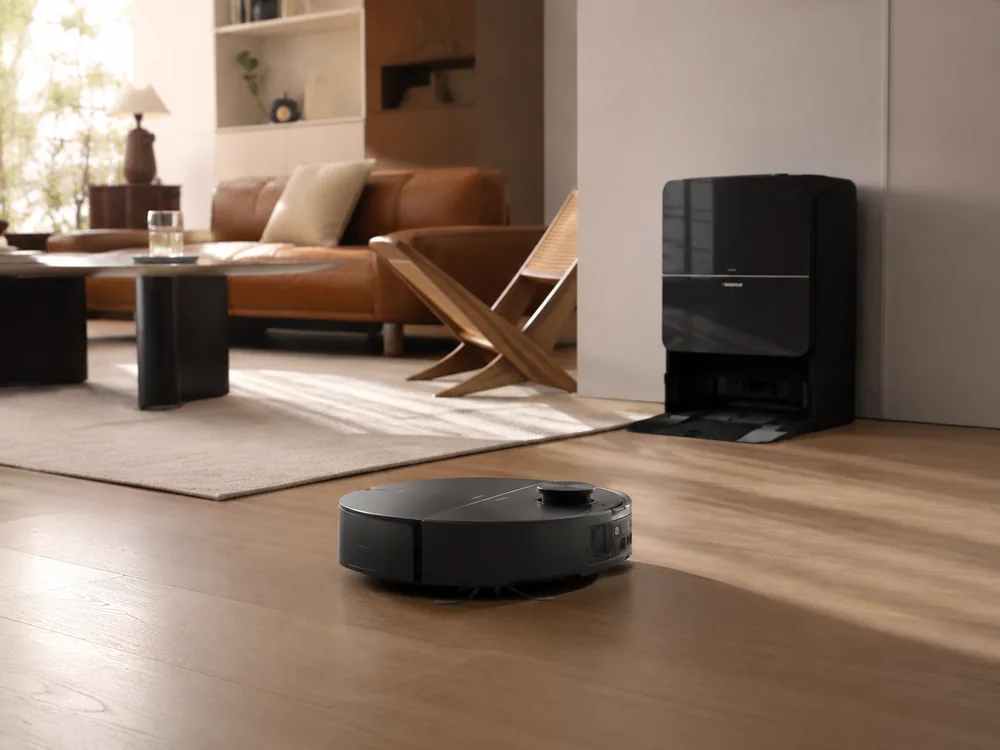
The most exciting gadgets of 2026 are not simply faster versions of familiar products. This year’s standouts experiment with disappearing televisions, wearable displays, shape-shifting phones, unusually capable household robots, and simpler technology that challenges the assumption that every device needs more distractions. Ranked by innovation, usefulness, and sheer ability to make someone stop and look, these seven gadgets represent some of the year’s most interesting ideas.
1. Meta Ray-Ban Display Glasses
Meta’s Ray-Ban Display glasses take the top position because they bring information directly into a familiar-looking pair of glasses rather than requiring a bulky headset. The built-in display can present messages, navigation, live captions, translations, photos, and responses from Meta AI within the wearer’s field of view. They also retain the camera, speakers, microphones, and voice controls that made earlier Ray-Ban Meta glasses useful for hands-free photos, calls, music, and questions.
The appeal lies in how ordinary they attempt to look. Smart glasses have existed for years, but many have felt like prototypes worn on the face; Meta’s version moves the category closer to something that could plausibly become an everyday accessory. Privacy, battery life, social acceptance, and dependence on Meta’s services remain important concerns, but this is one of the clearest glimpses yet of how phones may eventually become less central to daily computing. (Meta)
2. LG OLED evo W6 Wallpaper TV
The LG OLED evo W6 is less like a conventional television and more like a large moving image attached directly to the wall. Its display is approximately 9 millimeters thick, while a separate Zero Connect Box sends 4K video and audio wirelessly to the screen, reducing the usual bundle of cables running into the television. Available in 77- and 83-inch sizes, it combines the nearly flush installation with OLED black levels, high brightness, and gaming support up to 4K at 165Hz.
At a starting price of $5,499.99, the W6 is not an inexpensive upgrade, but it may be the most visually dramatic consumer gadget of the year. Many premium televisions promise better picture quality; this one changes the physical presence of the television itself. When mounted correctly, it looks less like electronics placed in a room and more like part of the architecture. (LG)
3. Roborock Saros Rover
The Roborock Saros Rover earns a high ranking for attacking one of the oldest limitations of robot vacuums: stairs. Instead of moving only on fixed wheels, the concept uses wheel-like legs that can lift and balance the machine as it travels up steps. Roborock says the system is intended to navigate traditional, curved, carpeted, and bullnose-front staircases while cleaning individual steps along the way.
That capability could eventually allow one robot to clean a multistory home without being carried between floors. The important limitation is that Saros Rover was introduced as a forward-looking product rather than an ordinary, widely available appliance, so it should not be treated like a proven purchase yet. Even so, it is one of the coolest gadgets of 2026 because it demonstrates how home robots may evolve from flat-floor appliances into machines capable of navigating the structure of a home.
4. Motorola Razr Fold
Motorola’s Razr Fold takes the familiar Razr name beyond flip phones and into book-style folding devices. It operates as a relatively compact smartphone with a 6.6-inch exterior screen, then unfolds into an 8.1-inch display suited to multitasking, reading, video, editing, and games. Motorola has also placed unusual emphasis on camera quality, using a 50-megapixel Sony LYTIA main sensor and presenting the device as a foldable that does not require a major photographic compromise.
At $1,899.99, it remains a luxury phone, and long-term hinge and display durability will matter as much as first impressions. Nevertheless, the larger inner screen makes the device genuinely different from a normal slab phone, rather than merely more expensive. It is especially compelling for people who want a tablet-like workspace without carrying a second device. (Motorola)
5. Apple Vision Pro With M5
Apple Vision Pro remains one of the most futuristic consumer devices available, and the newer version increases performance through Apple’s M5 chip while adding the more comfortable Dual Knit Band. The headset places large virtual screens, immersive environments, spatial photographs, video, and compatible games into the space around the wearer. Its eye-and-hand tracking allows much of the interface to be controlled by looking, pinching, and moving naturally rather than holding traditional controllers.
The price and headset form factor still prevent Vision Pro from becoming an everyday purchase for most households. It can also be isolating compared with a television or computer everyone can see. Yet few gadgets create the same immediate sense that conventional screens could eventually be replaced by digital surfaces positioned anywhere in a room. (Apple)
6. Pebble Round 2
Pebble Round 2 is cool for almost the opposite reason: it deliberately avoids becoming a miniature smartphone overloaded with health dashboards and distracting apps. The watch uses a 1.3-inch, 64-color e-paper touchscreen inside a stainless-steel round case, with an always-visible display and a design that more closely resembles a conventional watch. It works with Android and iOS and supports Pebble’s ecosystem of customizable watch faces and applications.
Its strongest feature may be restraint. The watch focuses on notifications, basic activity and sleep tracking, music control, voice functions, and long battery life rather than trying to duplicate every feature of a phone. At $199, it offers a refreshing alternative for people who like smartwatches but do not want another bright screen demanding attention throughout the day. (Pebble)
7. Apple’s New AirTag
The new AirTag is the least dramatic gadget on this list, but it may be the one most people would actually use. Apple updated the tracker with greater finding range and a louder speaker, making it easier to locate keys, luggage, bags, bicycles, and other possessions through the Find My network. It retains the small, simple design that allows an AirTag to disappear into daily life until something goes missing.
Its low ranking reflects ambition rather than usefulness. An item tracker cannot compete with smart glasses or a stair-climbing robot for spectacle, but a product that can help recover lost luggage or find keys buried somewhere in a house solves a common problem with very little effort. The best gadgets are sometimes the ones that remain invisible until the exact moment they are needed. (Apple)
The coolest gadgets of 2026 reveal two competing directions for consumer technology. Some are trying to place more computing into everyday surroundings through glasses, folding screens, spatial displays, and increasingly mobile robots, while others are becoming quieter and more focused. Whether the future belongs to immersive devices or deliberately simple ones, this year’s strongest products are those that change how technology fits into ordinary life rather than merely adding another specification to a familiar design.